Dog Cyst vs. Tumor: What Is the Difference?
What’s the difference between a dog cyst and a tumor? A cyst is usually a sac filled with fluid, keratin, oil, blood, or other material, while a tumor forms when cells grow abnormally and create a mass. A tumor may be benign or cancerous, and appearance alone cannot reliably identify what type of lump your dog has. Both types of lumps require a veterinary examination for an accurate diagnosis.
Some cysts and tumors look nearly identical from the outside, so firmness, color, or mobility cannot confirm what lies beneath the skin. A lump may also represent inflammation, an abscess, a reaction to an injury, or another medical condition. Mendocino Animal Hospital in Ukiah evaluates new and changing masses so pet owners can replace uncertainty with clear information.
What Does a Dog Cyst Look and Feel Like?
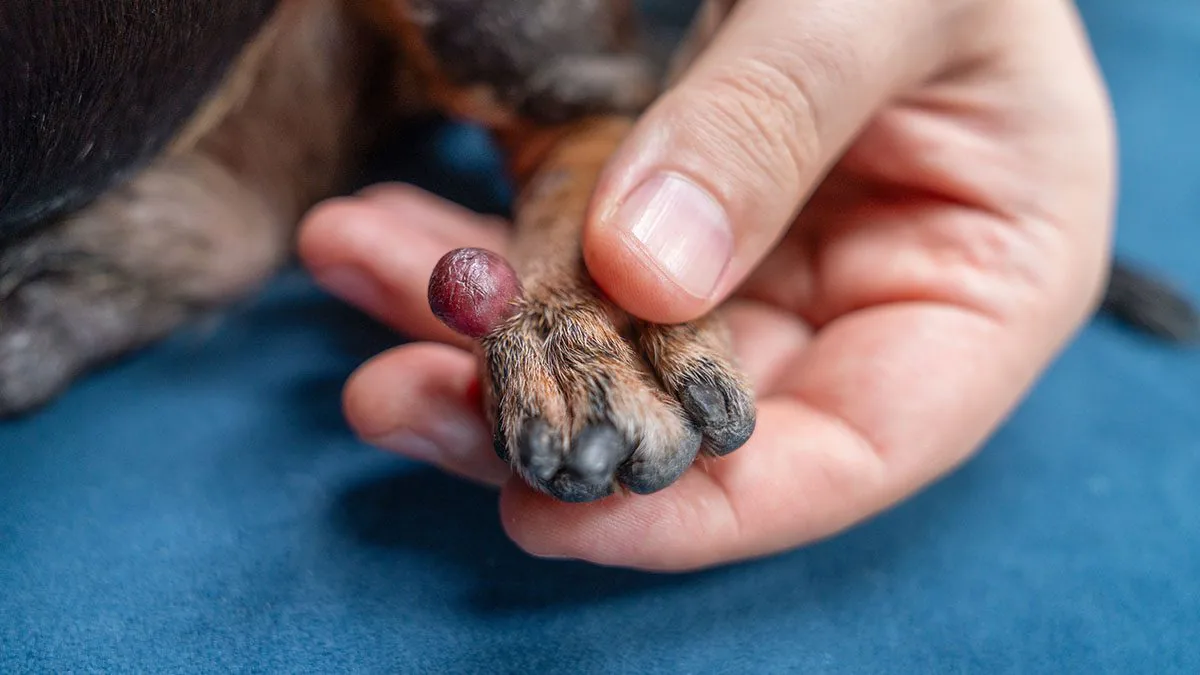
A dog cyst often develops when a hair follicle, oil gland, or another small skin structure becomes blocked or damaged. Many cysts appear as round, well-defined bumps within or just beneath the skin. They may feel firm, soft, or somewhat movable depending on what they contain. Some remain unchanged for months, while others enlarge, rupture, drain, or become inflamed.
A cyst may have a visible pore or opening, but many do not. Its contents can range from clear fluid to thick, pale material made from keratin and skin debris. Some cysts look white, blue, dark, or similar to the surrounding skin. Because infections, abscesses, and tumors can produce similar signs, drainage does not confirm that a lump is harmless.
What Is a Sebaceous Cyst on a Dog?
People often use “sebaceous cyst” to describe several types of skin cysts, including follicular cysts filled with keratin. These bumps commonly occur on the head, neck, trunk, or upper legs, although they can develop almost anywhere. A sebaceous cyst on a dog may look white, bluish, or skin-colored and may release thick material if it ruptures. It can also become swollen, irritated, or painful.
Do not squeeze, puncture, or repeatedly handle the lump. A veterinarian can determine whether the lesion needs sampling, removal, care for inflammation, or periodic monitoring. Even a lump that resembles a previously diagnosed cyst deserves evaluation when it first appears or begins changing. Different types of skin growths can look remarkably similar without microscopic testing.
What Is a Dog Tumor?
A dog tumor is a mass created by abnormal cell growth. Benign tumors generally remain localized and do not spread to distant organs. However, a benign growth can still interfere with movement, vision, eating, grooming, or comfort depending on its size and location. Malignant tumors can invade nearby tissue or spread to other parts of the body.
The word “tumor” does not automatically mean cancer. Common canine skin masses include benign fatty tumors, glandular growths, histiocytomas, mast cell tumors, and soft tissue sarcomas. Each type develops from a particular group of cells and may behave differently. No single texture, shape, or growth pattern can rule cancer in or out.
Can You Tell Whether a Dog Tumor Is Cancerous by Looking?
You cannot reliably determine whether a dog tumor is cancerous through appearance or touch alone. A soft, movable lump may be benign, but some malignant masses can feel similar. Likewise, a firm or irritated growth does not automatically indicate cancer. Laboratory evaluation provides more useful information than appearance alone.
This uncertainty explains why veterinarians often recommend testing rather than watching every new lump indefinitely. Early sampling may identify a harmless mass that only requires monitoring. It may also uncover a condition that benefits from prompt treatment. Testing gives the veterinary team a stronger basis for recommending monitoring, removal, or further diagnostic care.
How Does a Veterinarian Diagnose a Cyst or Tumor?
The diagnostic process begins with a physical examination and a focused history. Your veterinarian will ask when you first noticed the lump, whether it has changed, and whether your dog licks or scratches it. Its location, size, texture, depth, and relationship to nearby tissue can help guide testing. Dr. Charlotte Burns, Dr. Bethany Powers, Dr. Tara Venezio, and the veterinary team at Mendocino Animal Hospital can determine which diagnostic approach fits the individual mass.
Common diagnostic steps may include:
- Fine-needle aspiration: A veterinarian uses a small needle to collect cells or fluid for microscopic examination.
- Cytology: A veterinary laboratory professional evaluates the sample for inflammation, cyst contents, fat cells, or abnormal cell populations.
- Biopsy: A veterinarian removes part or all of the mass so the tissue structure can be examined.
- Additional testing: Bloodwork or diagnostic imaging may help evaluate general health or investigate whether a confirmed malignant tumor has spread.
Some masses release too few cells during aspiration, and certain tumor types require a biopsy for definitive classification and grading. Your veterinarian may recommend removal when the lump causes discomfort, repeatedly ruptures, grows quickly, or remains uncertain after initial testing. The mass’s location may also influence the recommendation. Testing allows the care team to make decisions based on evidence rather than assumptions.
Which Changes Make a Dog Lump More Concerning?
Any new dog cyst or dog tumor warrants veterinary attention, but certain changes increase the need for a timely appointment. Rapid enlargement, bleeding, ulceration, persistent drainage, color changes, and firm attachment to deeper tissue can indicate inflammation or concerning biological behavior. A mass near the mouth, eye, paw, joint, or throat may cause problems even when it is benign. Changes in your dog’s appetite, energy, weight, or behavior also deserve attention.
Watch for these changes:
- Noticeable growth over days or weeks
- A new irregular shape or rough surface
- Bleeding, discharge, odor, or an open sore
- Redness, warmth, swelling, or tenderness
- Interference with walking, eating, breathing, or elimination
- Appetite loss, low energy, weight loss, or other illness signs
Tracking a lump can help your veterinarian understand its progression. Record its location, take a clear photo beside a ruler, and note the date without repeatedly pressing or manipulating it. Do not let photographs replace an examination, since important differences often exist at the cellular level. Schedule an appointment when a lump first appears rather than waiting for dramatic changes.
When Does a Dog Cyst or Tumor Require Emergency Care?
Most skin lumps do not require an emergency visit, but complications can become urgent. Seek immediate veterinary care when a mass causes uncontrolled bleeding, severe pain, collapse, breathing difficulty, profound weakness, or sudden facial or throat swelling. A ruptured lump with heavy drainage, significant tissue damage, or rapidly expanding swelling also needs prompt assessment. Call ahead so the veterinary team can direct you to the appropriate level of care.
A dog with a stable, painless lump and normal behavior can usually receive care through a scheduled appointment. However, “stable” does not mean the lump should remain unexamined for months. Contact Mendocino Animal Hospital if you are unsure how quickly your dog needs to be seen. The team can help distinguish a routine appointment from a more urgent situation based on the symptoms you describe.
Schedule an Evaluation for Your Dog’s Lump
The safest way to distinguish a dog cyst from a dog tumor is to examine and sample the mass rather than relying on its appearance. Early evaluation can identify benign changes, address painful or inflamed cysts, and support timely planning when a tumor requires treatment. Call (707) 462-8833 or book an appointment online with Mendocino Animal Hospital in Ukiah, CA, if you find a new lump or notice changes in an existing one.
Recent Posts

Umbilical Hernia in Dogs
A small bump on a puppy’s belly can be easy to overlook, especially when the puppy seems…

Why Is My Cat Limping?
Why is my cat limping? A cat limping usually indicates they experience sudden trauma, a paw injury,…
How Often Should You Brush Your Dog’s Teeth?
You should ideally brush your dog’s teeth once every single day to effectively remove plaque before it…
Dog ACL Tear vs Sprain
A dog races across the yard, turns sharply, and suddenly lifts a back leg. Another begins limping…

TPLO Surgery in Dogs
TPLO surgery in dogs treats an unstable knee caused by a torn cranial cruciate ligament, or CCL….
About Mendocino Animal Hospital
At Mendocino Animal Hospital, we believe in fostering the human-animal bond with excellent veterinary medicine. Our full-service veterinary practice operates in Ukiah, CA with a team of skilled veterinarians and a passionate, talented support staff who make you feel like a part of the family.
As an AAHA-accredited animal hospital, every service and aspect of our practice meets AAHA’s Standards of Excellence. No matter what your pet comes in for, they’ll receive only the best in care, compassion, and service.